
Goal
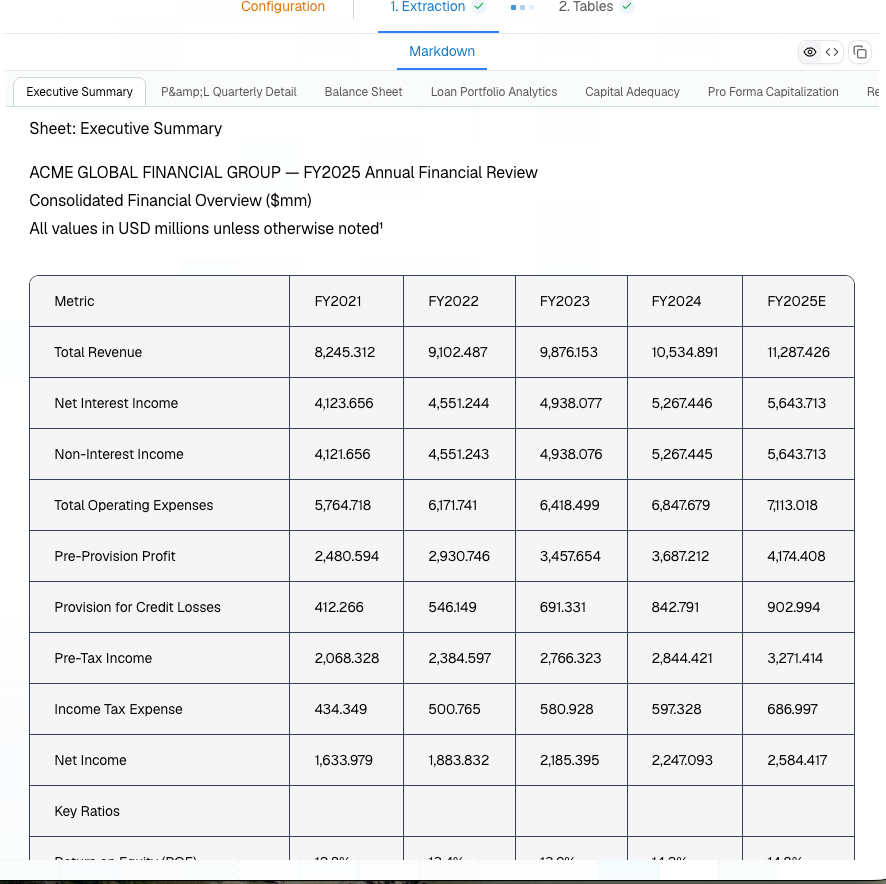
Parse an Excel workbook into markdown that preserves sheet structure, while controlling hidden rows, hidden sheets, display formatting, and inflated used ranges.Use This Workflow
Use this for financial models, loss runs, claims exports, underwriting workbooks, and operational reports.Platform Preview

Request
Settings
Checks
- Compare totals in extracted markdown against visible workbook totals.
- Decide whether hidden sheets are data, calculations, or irrelevant workbook machinery.
- Use raw values for downstream calculations and display values for human-facing reports.
- Store the workbook filename, sheet name, and extraction ID with downstream records.
- Test on real exported workbooks; phantom rows are usually system-specific.
Related
Spreadsheet Processing
Spreadsheet parameter guide.
Financial Tables
Table-first PDF workflows.